Patrick Mullaney
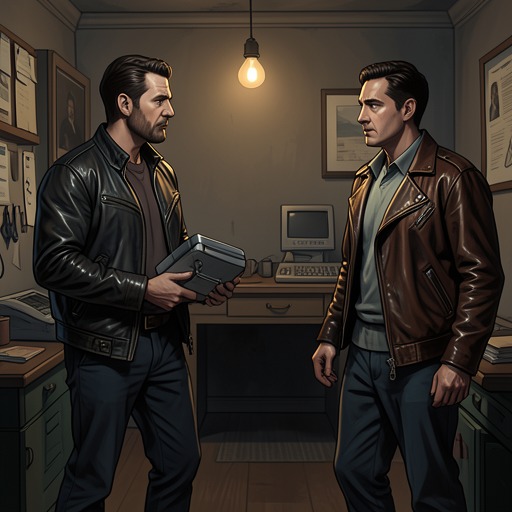
Dark Lies the IslandPatrick Mullaney is a thirty-six-year-old petty criminal, known to his younger brother as Patch, whose attempts to care for Tee-J are shaped by hard choices and dwindling resources. When he tries to retrieve his white van, he is juggling a release fee he cannot afford, property hidden in the vehicle, a threat from the father of a teenage girl he has dated, and plans for Tee-J’s release from detention. Patrick speaks of reform, but his story repeatedly exposes the gap between that intention and the dangers and obligations surrounding him.
Identity and circumstances
Patrick is part of the Mullaney family, whose history is marked by death, imprisonment, confinement in a secure ward, and relatives who have left for England. As he walks through traffic toward the vehicle clampers, he hears the traffic’s drone as continuous with what he thinks of as the babble of his dead. The crowded family past is not a stable source of support: it is a burden that accompanies him into the immediate struggle to get the van back.
The white van is essential to Patrick’s plans, but it is also a liability. It has been clamped, and the release charge is at least three hundred euros, while Patrick has only about two hundred and seventy euros and change. He fingers his money repeatedly as he walks, aware of the shortfall. He has to retrieve the vehicle before he can act on his other plans, so the van’s immobilization turns an ordinary practical problem into the bottleneck through which his immediate future must pass.
Plans, debts, and attempted reform
Patrick’s next priority is Tee-J, whose six-month term in a juvenile detention unit is ending. Patrick thinks of collecting him in dramatic terms as springing him, then corrects himself: Tee-J is due for release after serving the full sentence. The distinction makes Patrick’s attitude visible. He casts himself as the rescuer, even when the event he is anticipating is a scheduled release.
His own obligations complicate that reunion. The van contains 359 DVDs and a pair of wire cutters, hidden beneath the boards at the back. Patrick intends to pass the items to Doggie Mannion for a euro apiece if he can, rather than leave them in the vehicle. He knows the wire cutters in particular could send him back to Castlerea prison. These are not abstract worries: his plans depend on recovering a vehicle he cannot yet afford to release, and on moving incriminating goods out of it.
Patrick also fears the father of Enya, a girl he has dated once. He did not know she was fifteen and a half. After their date, her father threatened to take his head off if they met again. Patrick worries that Enya might remember the encounter badly, though he tries to reassure himself that she is unlikely to dwell on it. That attempted reassurance does not remove the threat; it is another risk he carries while heading for the clampers.
Patrick declares that he and Tee-J will go straight from then on: no more stealing DVDs from warehouses, no more taking vehicles, and no more sexual encounters in public facilities. His vow comes amid a catalogue of pressures rather than after any demonstrated escape from them. He knows the pair have already been through difficult times, but his resolution has to compete with the immediate need for money, transport, and somewhere to live.
Brotherhood and conflict
Patrick’s bond with Tee-J combines affection, responsibility, and a sense of looming danger. He regards the younger man’s earlier theft of an Isuzu Trooper and reckless drive through three counties as legendary, even though the episode ended with the pursuing guard crashing into a ditch. The story’s comic bravado sits beside Patrick’s darker belief that, left outside prison, Tee-J might soon die. Patrick had a bad feeling about him and turned him in himself, an act he understood as keeping his brother safe even though it placed Tee-J behind bars.
That decision leaves its mark on their relationship. When Tee-J asks whether they really have to go to Doggie’s, Patrick answers that they have to eat, while conceding that he understands his brother’s reluctance. The exchange gives material need priority over comfort: Patrick has no better option to offer. He is trying to provide for Tee-J, but the care he can manage is bound up with the very criminal economy he hopes to leave.
Patrick’s predictions about Tee-J are bleak. He expects trouble, arrest, bail, and a summons; he can already imagine explaining in court that his brother has gone to England. Yet, as they travel down the dual carriageway, he also sees the town as full of promise. Hope and foreboding persist together: he anticipates a familiar cycle of trouble without relinquishing the possibility that a different future might still open.
A precarious ending
At the visitors’ car park of the juvenile detention unit, Patrick has not even enough money for a bottle of Coke to give Tee-J. He does, however, have three-quarters of a tank of petrol, and the DVDs remain beneath the van’s boards. These small particulars define the limited resources with which he is trying to begin again. He breaks down sobbing before he goes inside, then crosses the car park under a vast, white summer sky that leaves him feeling unwell and apprehensive.
The ending gathers the threats around him without resolving them. Enya’s father may find him; the police may hear about crystal meth associated with the crowd at Roxy’s; the wire cutters remain in the van; and Patrick faces homelessness, chest pains, and stress. His teeth are falling out, he is growing greyer, and he doubts Tee-J will stay out of fights. The van itself is choking, though Patrick thinks that repairing its exhaust could make it fully serviceable. That practical optimism is characteristic: even as he sees the road ahead as leading in one direction, he keeps searching for a repair that might change the outcome.
Patrick’s characterization turns on the contradiction between protective intent and limited control. He has acted against Tee-J’s wishes to keep him alive, promises that they will abandon crime, and tries to secure food and transport; yet money, contraband, family loss, and his brother’s volatility keep narrowing the choices available. The van, at once a means of movement and a container of evidence against him, gives that predicament a concrete form. His hope is real, but the novel leaves it exposed to the consequences he already knows are gathering.